Septorhinoplasty: When Your Nose Structure Affects the Way You Breathe
Every winter in Kolkata, the same pattern returns: the haze settles over the city, the nasal sprays come out, and one nostril seems to give up long before the other. If your blocked nose feels worse every season but never fully clears in between, the problem may not be the air outside; it may be the structure inside.
Why Does Your Nose Feel Blocked All the Time?
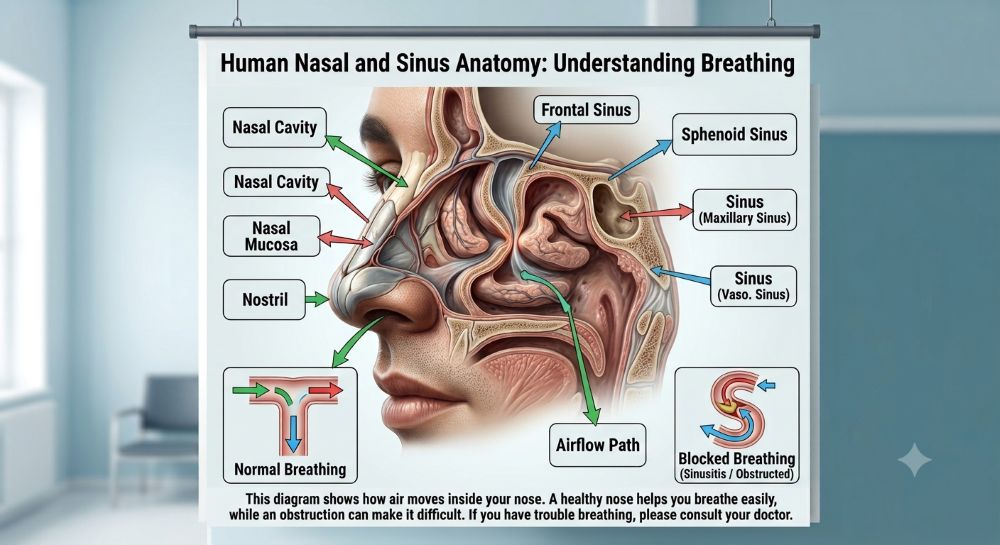
The septum is the thin wall of cartilage and bone that divides your two nostrils. When it bends to one side, it is called a deviated septum. Some people are born with it. In others, it follows an old injury, such as a fall, a sports knock, or an accident.
Patients often describe:
- One nostril that always feels tighter than the other
- Breathing through the mouth, especially at night
- Snoring or waking up with a dry mouth
- A nose that looks slightly tilted to one side
Not every blocked nose is caused by the septum, though. Allergies, swelling inside the nose, and sinus problems can feel very similar. A proper examination helps find the real cause. Sometimes that means working alongside an ENT or allergy specialist, so that each part of the problem gets the right care.
Septoplasty vs Rhinoplasty vs Septorhinoplasty
These three terms often confuse patients. Here is a simple way to tell them apart:
| Factors | Septoplasty | Rhinoplasty | Septorhinoplasty |
| Main focus | Breathing | Shape and proportion | Breathing and shape |
| Works on | The inside (septum) | The outer structure | Both |
| Changes appearance? | Usually not | Yes | Yes |
| Surgeries needed | One | One | One, for both concerns |
Many people looking into rhinoplasty in Kolkata are surprised to learn that a crooked outer nose and a blocked airway can share the same cause. When they do, correcting only one side of the problem may leave the other unchanged.
What Are the Advantages of Septorhinoplasty?
When breathing and shape concerns are linked, a combined approach offers some practical benefits:
- One operation addresses both the inside and the outside of the nose
- One anaesthesia instead of two separate ones
- One recovery period, so less total time away from work and daily life
- Joint planning, so changes to the shape are made with the airway in mind, not against it
- Possible improvement in daily comfort, such as sleep, exercise and breathing at work, for many patients
Individual results vary from person to person. The extent of improvement depends on your nasal structure, healing, and overall health.
Which Option Suits Your Concern?
There is no single right answer for everyone. This table may help you think about where your concern fits:
| Your main concern | Option often discussed |
| Breathing trouble, happy with the shape | Septoplasty |
| Shape concern, breathing is comfortable | Rhinoplasty |
| Both breathing and shape | Septorhinoplasty |
| Congestion linked to allergies or sinuses | Medical treatment first, often with ENT input |
My role is to explain clearly what each option can and cannot do. The decision always stays with you.
What Happens During Septorhinoplasty?
Before surgery
- A detailed discussion of your concerns and medical history
- An examination of the inside of your nose and your breathing
- An assessment of how your nose fits your overall facial proportions
During surgery
The procedure is done under anaesthesia. There are two main approaches:
| Approach | How it works | Often chosen when |
| Open | A small cut across the columella (the strip of skin between the nostrils) | More detailed structural work is needed |
| Closed | All cuts are made inside the nostrils | The changes needed are simpler |
The septum is straightened, and cartilage may be reshaped or repositioned to support both the airway and the outer shape. Which approach is used depends on your nasal structure, not on a fixed preference.
What Does Recovery Look Like Over Time?
| Stage | What to expect |
| First 2 weeks | A nasal splint protects the nose. Swelling and bruising around the eyes are common and settle gradually. |
| Around 1 month | Strenuous activity and heavy workouts are avoided. |
| Up to 6 months | The nose shape continues to settle as the swelling reduces. |
Helpful do's and don'ts:
- Do not blow your nose until your doctor allows it
- Avoid heavy lifting and intense exercise
- Wear button-up shirts so nothing is pulled over your face
- Avoid resting spectacles on the nasal bridge for a few weeks
- Follow your prescribed medicines and aftercare exactly
- Keep every follow-up appointment
Healing timelines vary from person to person.
What Risks Should You Know About?
Every surgery carries some risk. Being aware of them helps you make a fully informed choice.
- Swelling and bruising that take time to settle
- Temporary numbness around the nose
- Bleeding or infection, which are uncommon
- Risks related to anaesthesia
- In some cases, a small secondary correction, because cartilage heals differently in each person
The aim of surgery is improvement and better balance, not perfection. A clear discussion before surgery helps you set realistic expectations.
Know Your Nose Before Deciding
Living with a blocked nose and a shape that bothers you can feel tiring. The good news is that you have clear options: septoplasty, rhinoplasty, or a combined septorhinoplasty. Each has its own purpose, and understanding them is the first step.
If your nose structure has been affecting the way you breathe, start by noticing your patterns: which side feels blocked, when it gets worse, and what has or hasn't helped. Whichever path you consider for nose surgery in Kolkata, note down your symptoms, your concerns, and your questions. Then take time to discuss them with a qualified plastic surgeon. Taking that time helps you make a choice that feels right for you.
Author:
Dr. V S Rathore
M.B.B.S. (Hons) MS, M. Ch,
Plastic, Cosmetic & Reconstructive Surgeon
Frequently Asked Questions
1. Will septoplasty alone change how my nose looks?
Septoplasty works on the inside of the nose, so the outer shape usually stays much the same. If the outer nose is crooked because of the septum, reshaping may need a rhinoplasty component as well.
2. Is septorhinoplasty painful?
The surgery is done under anaesthesia, so you will not feel pain during it. Afterwards, pressure, stuffiness, and soreness are common for some days. Prescribed medicines help, and comfort levels vary from person to person.
3. Can an old nose injury be corrected years later?
In many cases, yes. A nose that healed crooked after a fall or sports injury can often be assessed for correction later. The plan depends on how the bone and cartilage have healed over time.
4. When can I wear spectacles again?
Heavy spectacles resting on the nasal bridge should be avoided for a few weeks after surgery, as the healing structures need protection. Your doctor will advise when it is safe, based on how your nose is healing.
5. How do I know if my blocked nose is structural?
Constant one-sided blockage, a visibly bent nose, or blockage that sprays never fully clear may point to a structural cause. Only an examination can confirm it, as allergies and sinus problems can feel similar.
Disclaimer: This content is for general educational purposes only and does not constitute medical advice. Outcomes vary between individuals. Please consult your treating doctor for a personalised assessment before starting any treatment.