Tanning or Pigmentation? How to Tell What Your Skin Actually Needs
After several days of Durga Puja celebrations, outdoor outings and long hours in the sun, you may notice that your skin looks darker or less even than usual. But is it tanning, or could it be pigmentation? Understanding tanning vs pigmentation is important because these concerns may look similar but develop for different reasons and may need different approaches to care.
In my practice, I often explain that not every darkened area needs the same treatment. A tan may gradually fade as the skin renews itself, while conditions such as melasma or post-acne pigmentation can persist for much longer. Identifying the underlying cause is the first step towards making informed decisions about skin health.
How Can You Tell the Difference Between Tanning and Pigmentation?
Tanning occurs when the skin produces more melanin in response to ultraviolet (UV) radiation. Melanin is the natural pigment that gives skin its colour and helps protect it from UV damage. Following sun exposure, the skin may develop a darker appearance, often across the areas that were exposed.
Pigmentation is a broader term. It describes changes in skin colour that may result from several factors, including sun exposure, hormonal influences, inflammation and certain skin conditions.
Here are some common differences:
| Feature | Tanning | Other forms of pigmentation |
| Appearance | Often a relatively uniform darkening | May appear as distinct patches or spots |
| Distribution | Usually affects sun-exposed areas | Depends on the underlying cause |
| Common triggers | UV exposure | Sun exposure, hormones, inflammation and other factors |
| Duration | May gradually fade | Can persist or recur, depending on the condition |
These differences provide useful clues, but appearance alone cannot always establish the diagnosis.
Why Do Some Dark Patches Remain After a Tan Fades?
A tan and persistent pigmentation can sometimes occur together. When the general darkening caused by sun exposure fades, older pigmentary changes may become easier to notice.
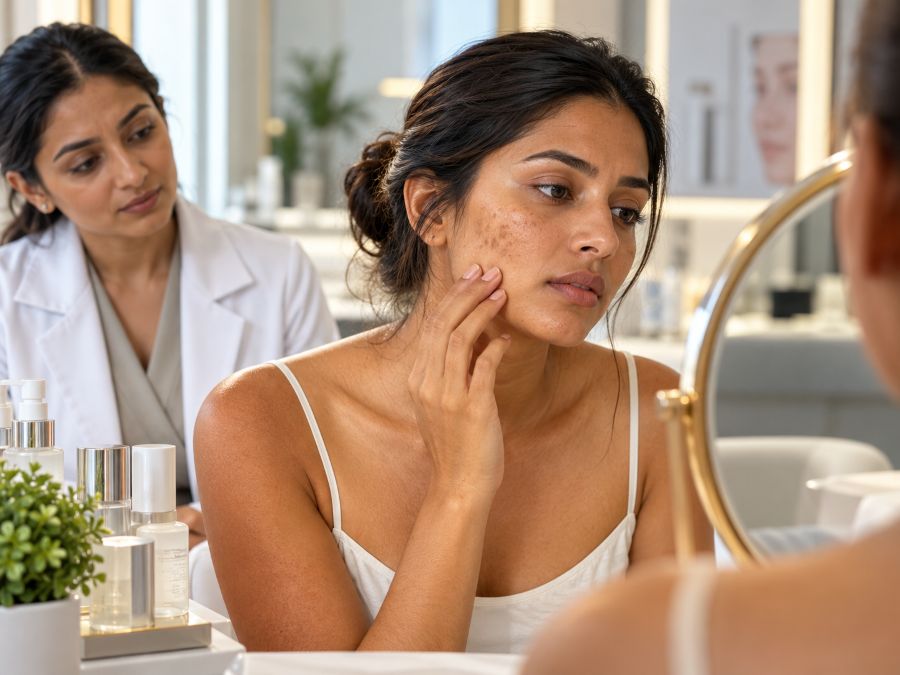
Post-inflammatory hyperpigmentation is one example. It can develop after inflammation or injury to the skin, including acne, eczema or irritation from certain skincare products. The affected areas may appear brown, dark brown or greyish, depending on the depth and nature of the pigmentation.
Melasma is another common cause of persistent patches, particularly on the cheeks, forehead and upper lip. Hormonal influences and sun exposure can contribute to its development.
Understanding the causes of dark patches helps determine what kind of care may be appropriate. Applying multiple brightening products without identifying the cause can irritate the skin and sometimes make pigmentation more noticeable.
Can Sun Exposure Make Melasma More Noticeable?
Yes. Sun exposure can worsen melasma and contribute to its recurrence. Ultraviolet radiation and visible light can influence pigmentation, particularly in people who are prone to developing melasma.
This matters during festival periods, when outdoor celebrations, travel and extended time in the sun may become part of the routine.
I generally emphasise a few practical habits for protecting the skin:
- Use a broad-spectrum sunscreen with SPF 30 or higher.
- Reapply sunscreen according to its instructions, especially after sweating or prolonged outdoor activity.
- Wear a hat or use shade when spending extended periods outdoors.
- Avoid skincare products that cause persistent burning, redness or irritation.
- Follow a gentle cleansing and moisturising routine.
Sun protection remains important even when visible tanning has started to fade. It helps limit further UV-related skin damage and supports the management of several pigmentary conditions.
How Is the Cause of Uneven Skin Tone Assessed?
When someone seeks uneven skin tone treatment, I would first want to understand how the discolouration developed rather than immediately suggest a procedure.
The assessment may include questions about when the patches appeared, whether they change with sun exposure, any history of acne or irritation, current skincare products and relevant medical history.
I would also examine the pattern, colour and distribution of the affected areas. In some cases, further evaluation may be needed to distinguish melasma from other pigmentary conditions.
This matters because different concerns require different approaches. A person with recent tanning may need consistent sun protection and time for the skin to recover. Someone with melasma or post-inflammatory hyperpigmentation may require a more specific management plan.
For those researching pigmentation treatment in Kolkata, it is worth understanding that the appropriate option depends on the diagnosis, skin characteristics and medical history. Peels, laser-based procedures and topical treatments are not suitable for every type of pigmentation, and some procedures may worsen discolouration if used inappropriately.
When Should Persistent Pigmentation Be Evaluated?
If a patch continues to change, persists despite appropriate sun protection, or repeatedly returns, a medical assessment can help clarify its cause.
Seek assessment sooner if a spot changes rapidly in size, shape or colour, develops irregular borders, bleeds or becomes persistently itchy. Such changes should not automatically be attributed to tanning or ordinary pigmentation.
I also advise caution with unlabelled fairness creams, strong exfoliating products and unprescribed combination creams. Irritation can trigger further pigmentation, and some skin-lightening products may contain ingredients that are unsuitable for unsupervised use.
The aim should be to understand the skin's condition and choose care that is appropriate for it, rather than trying several treatments at once.
Understanding Your Skin Before Choosing Treatment
Tanning, melasma and post-inflammatory hyperpigmentation can all affect skin tone, but they are not interchangeable conditions. The difference matters because each has its own triggers, course and management considerations.
When assessing tanning vs pigmentation, I encourage patients to look at how the discolouration began, where it appears and whether it persists after sun exposure decreases. These details can help guide a more informed discussion about skin care and treatment options.
A qualified medical practitioner can assess persistent or changing pigmentation and explain which approaches may be suitable for the individual.
Frequently Asked Questions
1. How can I tell if my skin is tanned or pigmented?
Tanning often causes broader darkening across sun-exposed areas. Pigmentation may appear as distinct patches or spots. However, both can occur together, so persistent or unusual changes may need medical assessment.
2. How long does a tan take to fade?
A tan may gradually fade over several weeks as the skin renews itself, although the duration varies. Continued sun exposure can maintain the darkened appearance. Consistent sun protection helps reduce further UV exposure.
3. Can tanning turn into permanent pigmentation?
Tanning does not automatically become permanent pigmentation. However, repeated UV exposure can contribute to persistent pigmentary changes, and sun exposure may worsen conditions such as melasma. Persistent patches should be assessed.
4. What causes dark patches on the face?
Common causes include melasma, post-inflammatory hyperpigmentation, sun-related changes and certain skin conditions. The appearance alone may not establish the cause, so assessment is important when patches persist or change.
5. Which treatment is suitable for uneven skin tone?
Treatment depends on the cause. Sun protection and appropriate skincare may help some concerns, while others may require medical treatment. A qualified practitioner can assess the skin and discuss suitable options.
About Dr. V S Rathore
Dr. V S Rathore
M.B.B.S. (Hons) MS, M. Ch
Plastic, Cosmetic & Reconstructive Surgeon
Dr. V S Rathore writes about cosmetic, plastic and reconstructive surgery to help readers understand skin concerns, treatment considerations and the importance of individual assessment.
Medical Disclaimer: This content is for general educational purposes only and does not constitute medical advice. Individual results vary. Please consult a qualified medical practitioner for a personalised assessment before making decisions about skin treatment.