Monsoon Acne in Kolkata: Why Breakouts Increase in Humid Weather
The rains arrive, the temperature finally drops, and yet the skin behaves as though it has entered its own season of breakouts. New bumps along the jawline. Old acne scars looking darker than they did in the summer months. A persistent shine by noon that no blotting sheet seems to fix. If monsoon has become a recurring skin concern for you, this is not unusual — it is a well-known seasonal effect.
Humidity brings clear, specific changes to the skin, and understanding these changes is the first step toward managing them well.
Why Humid Weather Triggers More Breakouts
Monsoon changes the environment your skin lives in every single day. Three shifts happen almost simultaneously.
1. Oil Production Goes Into Overdrive
High humidity confuses the skin's natural balance. It senses moisture in the surrounding air and, in response, produces even more oil than usual. This extra oil mixes with sweat, dust, and pollution sitting on the surface, which leads directly to clogged pores.
2. Sweat Doesn't Evaporate the Way It Should
In drier weather, sweat dries quickly and carries some surface dirt away with it. In humid air, sweat stays on the skin much longer, trapping bacteria against the surface instead of clearing it away.
3. Bacteria Multiply Faster in Warm, Damp Conditions
Acne-causing bacteria grow quickly in warm, damp conditions. Monsoon weather closely matches the environment they thrive in, which is why breakouts during this season tend to be more inflamed and harder to clear with basic home treatment.
Common Monsoon Skincare Errors Worth Correcting
Most breakout concerns during this season come down to a few common habits.
- Skipping sunscreen because it's cloudy — UV rays still pass through clouds and continue to worsen acne marks
- Washing the face too often — this weakens the skin barrier and pushes it to produce even more oil
- Using heavy, thick creams — formulas made for winter tend to clog pores in humid weather
- Touching the face often — umbrellas, damp hair, and hands transfer more bacteria in this season
- Ignoring damp pillowcases and towels — these hold onto moisture and bacteria much longer in humid months
Fixing these habits alone can prevent a large share of monsoon flare-ups before they start.
Building a Monsoon-Ready Skincare Routine
A few consistent habits go a long way in humid weather.
Cleanse Smarter, Not Harder
A gentle, gel-based cleanser used twice a day removes excess oil without harming the skin barrier. Harsh, foaming cleansers often make things worse during this season.
Lighten Up on Moisturiser
A water-based, oil-free moisturiser works best in this season. Skin still needs hydration even when the air feels wet, and skipping moisturiser altogether is a common mistake that many people make.
Never Skip SPF
A lightweight, non-greasy sunscreen protects against pigmentation and prevents active acne from darkening further.
Exfoliate, But Gently
A mild exfoliant used once or twice a week helps clear away the dead skin cells that clog pores faster during monsoon. Over-exfoliating, though, can irritate skin that is already sensitive.
When Home Care Isn't Enough
Some breakouts respond well to a good routine. Others — the deep, painful, or repeated kind — need more focused treatment. If you have been considering professional pimple removal in Kolkata because over-the-counter products aren't keeping up with monsoon breakouts, this usually means the acne has gone beyond what creams alone can fix.
Clinical treatments work differently from home remedies because they address the problem at more than one level at once — clearing existing breakouts, calming inflammation, and controlling the bacteria that humidity encourages.
Dealing With the Marks Breakouts Leave Behind
Monsoon acne rarely leaves without a trace. Even after a breakout heals, it often leaves behind dark spots, uneven texture, or pitted marks — and humidity makes these marks harder to fade naturally, since extra oil and inflammation slow down healing.
This is where acne scar removal in Kolkata becomes worth considering, especially for scars that have stayed for months or years despite creams and home remedies. Modern dermatological treatments can visibly improve texture, tone, and scarring in ways that skincare products alone cannot.
Support Between Treatments
For those managing active breakouts along with dull, tired-looking skin during monsoon in Kolkata, a hydra facial is often recommended as a supporting treatment. It deep-cleans the pores, hydrates without adding extra oil, and helps skin look fresh between more targeted acne treatments.
Practical Habits Worth Maintaining This Season
- Change pillowcases every two to three days
- Carry blotting papers instead of touching your face
- Keep hair tied back and off the forehead
- Avoid heavy, comedogenic makeup during humid days
- Stay hydrated — internal hydration supports skin barrier function too
The Bottom Line
Monsoon acne does not mean the skin has suddenly gotten worse. It is a predictable, well-understood reaction to humidity, oil, and bacteria working together. The right daily habits handle most of it — and where home care isn't enough, dermatological treatment closes the gap safely and quickly.
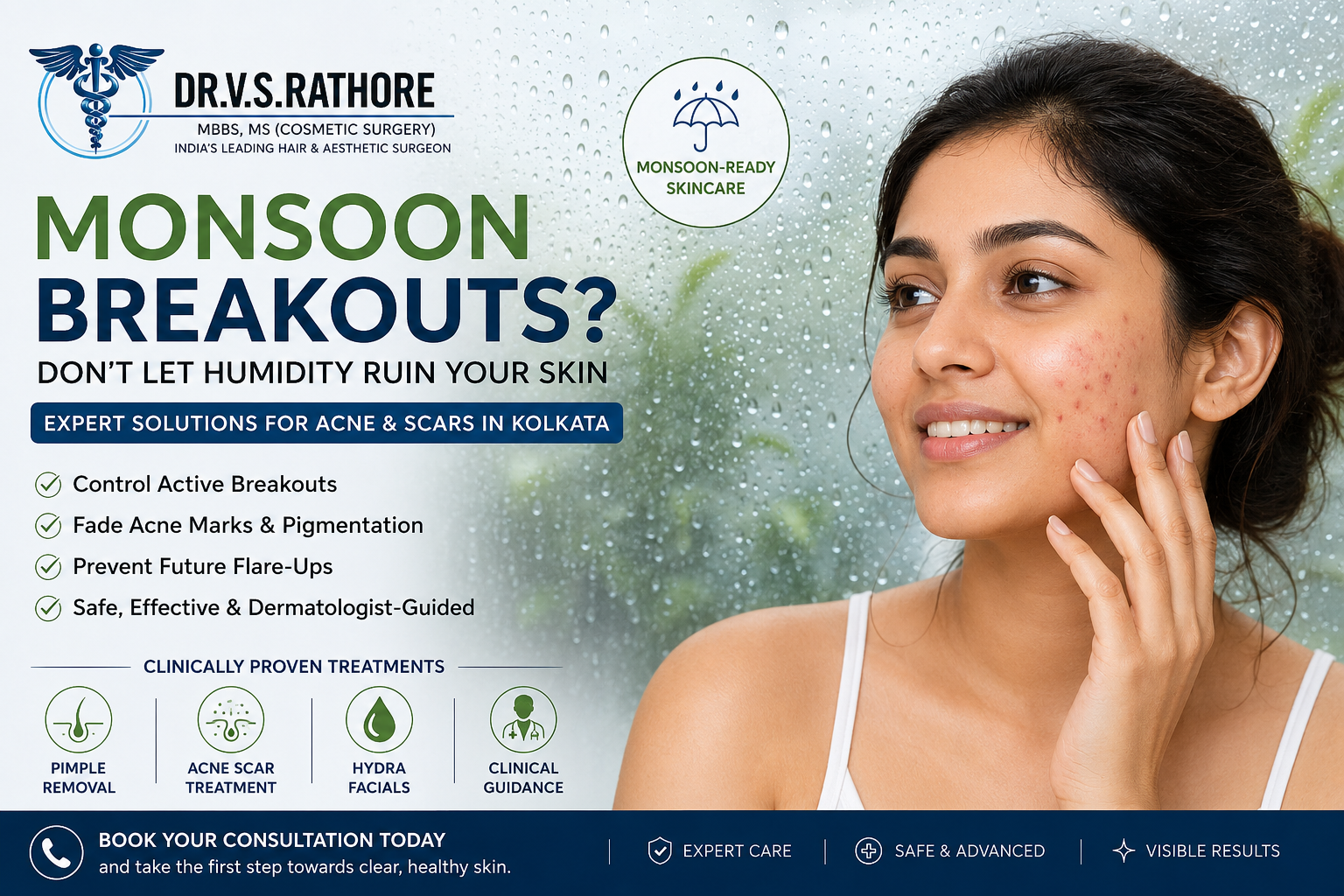
If breakouts, scarring, or dull monsoon skin have persisted longer than they should, Dr. V.S. Rathore at Kaayakalp offers clinically guided solutions built around genuine skin assessment, not guesswork. From active acne to stubborn scars, the team at Kaayakalp under Dr. V.S. Rathore designs treatments suited to how the skin actually responds — monsoon included. Book a consultation with Dr. V.S. Rathore at Kaayakalp today and give your skin the clinical attention this season demands.
Frequently Asked Questions
1. Why does my skin break out more when it's raining or humid outside? Humid air makes your skin produce more oil than usual, and sweat doesn't dry off the skin as quickly. This combination clogs pores faster and lets acne-causing bacteria multiply, which is why breakouts feel more frequent and more stubborn during rainy weather.
2. Should I stop moisturising my face during monsoon since it's already humid? No, skipping moisturiser usually backfires. Your skin still loses hydration even in humid weather, and when it feels dry, it often produces even more oil to compensate. A light, water-based moisturiser keeps skin balanced without adding heaviness.
3. Do I still need sunscreen if it's cloudy or raining? Yes. Clouds block only a small portion of UV rays, and sun exposure is one of the biggest reasons acne marks turn darker and take longer to fade. A lightweight sunscreen should stay in your routine regardless of the weather.
4. Why do my acne marks look darker or more stubborn during rainy season? Excess oil, inflammation, and prolonged healing time during humid weather all slow down how fast marks fade naturally. Marks that would fade in a few weeks during drier months can sometimes linger much longer when humidity is high.
5. Are natural or home remedies enough to control monsoon acne? Home remedies can help with mild, occasional breakouts, especially when paired with a clean, simple routine. But if acne is frequent, painful, or leaving behind scars, that usually means the skin needs more targeted treatment than home care alone can provide.