Loose Skin After Weight Loss: Is Abdominoplasty the Answer?
OR
Lost Significant Weight? Here Is What Abdominoplasty Can Address
Losing a significant amount of weight is a real achievement. It takes discipline, consistency, and time. But for many patients, the weighing scale changes and the abdomen does not. Loose, sagging skin around the belly remains, and no amount of exercise changes that. The body has its own limitations that go beyond what willpower can change. It is simply what happens when skin stretches beyond its ability to contract on its own.
Abdominoplasty, commonly known as a tummy tuck, is a surgical procedure that addresses this specific concern. This guide explains what it involves, who it is suitable for, and what patients should know before making any decision.
Individual results vary. Please consult a qualified doctor for a personalised assessment.
Why Skin Does Not Always Bounce Back After Weight Loss
Many patients assume that once the weight is gone, the skin will follow. Unfortunately, skin elasticity has limits, especially after significant or rapid weight loss.
Here is what typically happens:
- Skin stretches during weight gain to accommodate increased body mass
- After weight loss, the underlying fat diminishes but the stretched skin remains
- Factors like age, genetics, the amount of weight lost, and how quickly it was lost all affect how much the skin can retract
- Exercise builds muscle underneath, but it cannot physically remove excess skin
- This is a structural issue, not a fitness issue
For patients who have lost 20 kilos or more, loose abdominal skin is extremely common and entirely understandable.
What Abdominoplasty Actually Involves
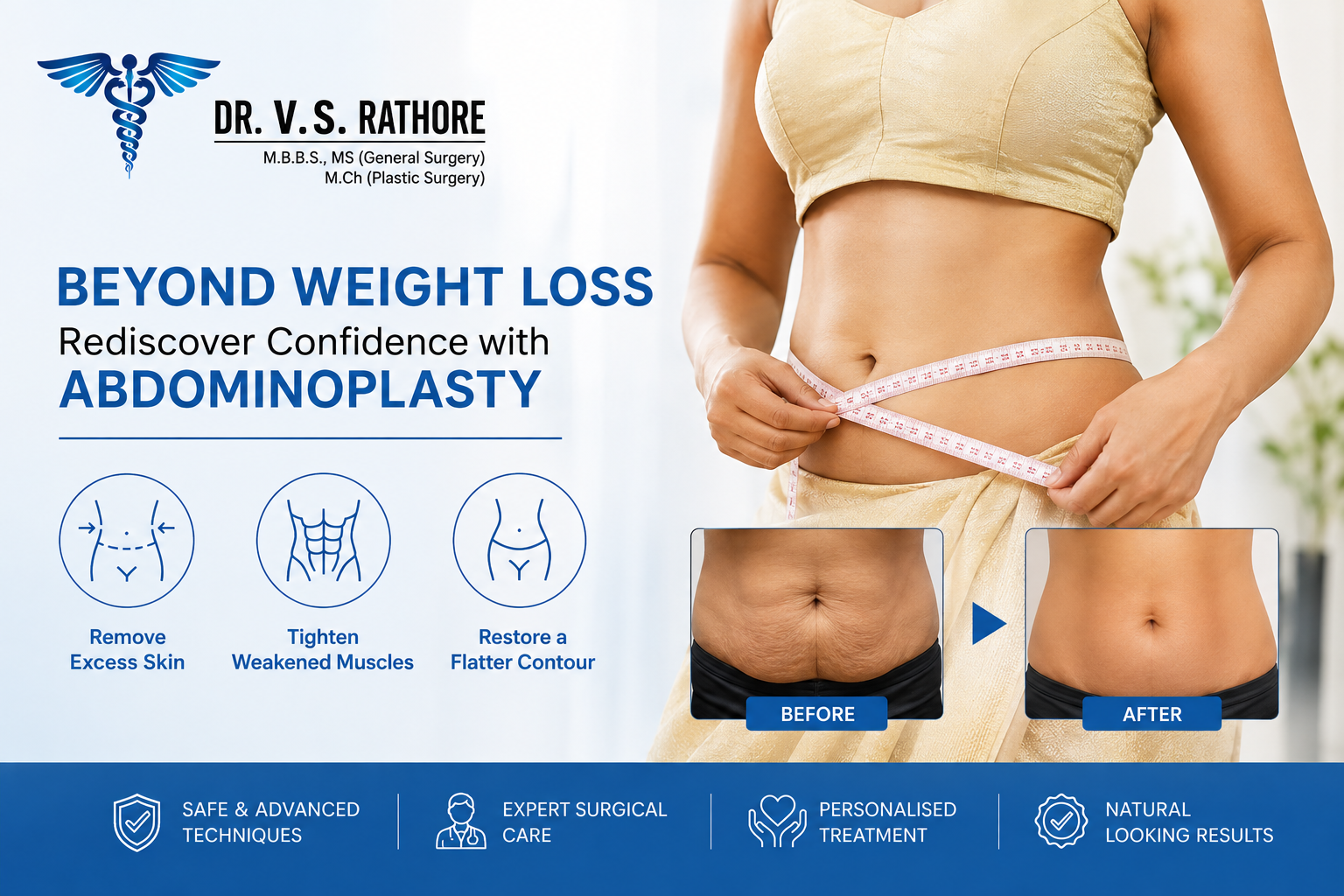
Abdominoplasty is a surgical procedure that removes excess skin and fat from the abdominal area and, where needed, repairs the underlying abdominal muscles that may have separated or weakened.
There are two main types:
| Type | What It Addresses | Suitable For |
| Full Abdominoplasty | Excess skin above and below the navel, muscle repair | Significant skin laxity, post-pregnancy, major weight loss |
| Mini Abdominoplasty | Excess skin below the navel only | Mild to moderate laxity, smaller treatment area |
The procedure is performed under general anaesthesia and typically takes two to four hours depending on the extent of correction required.
Are You a Suitable Candidate For Tummy Tuck?
Not every patient who has lost weight will require or benefit from abdominoplasty. A surgical assessment is always necessary before any decision is made.
Patients who are generally considered suitable:
- Have lost a significant amount of weight and maintained it for at least six to twelve months
- Have noticeable loose or excess skin around the abdomen that does not respond to exercise
- Are in good general health with no uncontrolled medical conditions
- Who do not smoke, or have completely stopped smoking at least four to six weeks before the procedure
- Have realistic expectations about outcomes, abdominoplasty improves contour, it does not guarantee a specific result
Patients who may be advised to wait or explore other options:
- Are still actively losing weight
- Are planning future pregnancies
- Are significantly above their target weight
- Are managing active medical conditions such as diabetes, cardiovascular concerns, or clotting disorders that have not yet been stabilised
Non-Surgical Options Worth Knowing About
Surgery is not always the immediate answer, and it is important that patients are aware of all available options before making a decision.
Non-surgical skin tightening treatments include:
- Radiofrequency treatments: It uses heat energy to stimulate collagen and improve mild skin laxity
- HIFU (High-Intensity Focused Ultrasound): It targets deeper skin layers to encourage tightening
- Body contouring treatments: It can reduce localised fat but do not address loose skin effectively
These options work best for mild laxity. For patients with significant excess skin following major weight loss, non-surgical treatments typically offer limited improvement. A clinical assessment helps determine which path is appropriate for each individual.
How to Prepare for Abdominoplasty
Preparation plays a significant role in how smoothly the procedure and recovery go. Here is a general guide:
- Weight stability: ideally maintain a stable weight for at least six months before surgery
- Smoking: stop smoking a minimum of four to six weeks before the procedure, as smoking affects healing
- Medications: inform your surgeon of all current medications; blood thinners and certain supplements may need to be paused
- Pre-operative tests: blood work and a general health assessment are standard requirements
- Arrangements at home: plan for a responsible adult to assist during the early recovery period
- Realistic expectations: discuss openly with your surgeon what the procedure can and cannot achieve for your specific case
Understanding the Risks
As with any surgical procedure, abdominoplasty carries risks that every patient should be aware of before proceeding.
| Risk | Details |
| Scarring | A horizontal scar along the lower abdomen is expected; its visibility varies by individual |
| Infection | Managed with antibiotics and proper wound care |
| Swelling and bruising | Common in the weeks following surgery |
| Fluid accumulation | Temporary drains may be placed post-surgery to manage this |
| Changes in sensation | Some numbness around the treated area is common and usually temporary |
| Healing variation | Patients with diabetes or circulatory concerns may heal more slowly |
Choosing an experienced, qualified surgeon and following all pre and post-operative instructions significantly reduces these risks. Results and recovery timelines vary patients to patients.
Recovery: What to Expect and When
Recovery from abdominoplasty is gradual. The following is a general timeline, individual experiences will differ.
| Timeframe | What to Expect |
| Days 1 to 3 | Discomfort, swelling, drains in place if used, rest is essential |
| Week 1 to 2 | Limited mobility, light activity only, wound care begins |
| Week 3 to 4 | Gradual return to light daily activities, avoid lifting |
| Week 6 | Most patients return to desk-based work and light exercise |
| 3 to 6 months | The treated area gradually settles and the outcome of the procedure begins to reflect more clearly |
| 12 months | Final results are generally visible as scarring matures |
Compression garments are typically worn for several weeks post-surgery to support healing and contouring. Full recovery and final results take time, patience is an important part of the process.
Post-Operative Care: Key Instructions
Following post-operative guidance carefully is one of the most important factors in recovery.
- Follow your surgeon's specific wound care instructions, including hygiene protocols for the treated area
- Wear the compression garment for the duration advised by your surgeon
- Avoid strenuous activity, lifting, or bending for at least six weeks
- Attend all follow-up appointments without delay
- Report any unusual swelling, redness, discharge, or fever to your surgeon promptly
- Maintain a balanced diet to support healing, adequate protein and hydration matter
- Avoid smoking throughout the recovery period
Every patient's recovery is different. Follow the specific instructions given by your treating surgeon rather than general timelines alone.
A Note on Cost
The cost of abdominoplasty in Kolkata varies depending on several factors:
- Whether a full or mini abdominoplasty is required
- The extent of muscle repair involved
- Anaesthesia and facility charges
- Pre-operative investigations and post-operative follow-up
As a general reference, abdominoplasty procedures in Kolkata range from approximately ₹80,000 to ₹2,00,000 or more, depending on complexity. A detailed cost breakdown is best discussed during a clinical consultation, as pricing is specific to each patient's requirements.
What the Next Step Looks Like After Significant Weight Loss
Significant weight loss is not the end of the journey for many patients, it is the point where a new set of questions begins. Loose skin, changed body contour, and concerns that exercise cannot resolve are genuinely common, and they deserve a considered, informed response.
Abdominoplasty in Kolkata is one of the options available to patients at this stage. Whether it is the right option depends entirely on individual health, anatomy, and expectations, all of which are best assessed in person by a qualified surgeon.
For patients in Kolkata considering this step, an initial consultation can be requested online or by phone, allowing a surgeon to review your concerns and advise on the most appropriate path forward, without any obligation to proceed.
Author:
Dr. V S Rathore
M.B.B.S. (Hons) MS, M. Ch,
Plastic, Cosmetic & Reconstructive Surgeon
Frequently Asked Questions
Q1. How long does abdominoplasty recovery take?
Most patients resume light daily activities within four to six weeks. Full recovery, including visible results and scar maturation, typically takes up to twelve months. Individual recovery timelines vary depending on overall health and extent of surgery.
Q2. Will a tummy tuck remove my stretch marks?
Abdominoplasty may remove some stretch marks located on the excess skin that is surgically removed, particularly below the navel. Stretch marks above the navel are generally not affected. Results vary between individuals.
Q3. How much does a tummy tuck cost in Kolkata?
The cost of abdominoplasty in Kolkata typically ranges from ₹80,000 to ₹2,00,000 or more, depending on the procedure type, complexity, and facility. A precise estimate requires an in-person clinical assessment.
Q4. Will there be a visible scar after abdominoplasty?
Yes. A horizontal scar along the lower abdomen is a standard outcome of the procedure. Its length and visibility depend on the extent of surgery and individual healing. In most cases it is positioned discreetly below the waistline.
Q5. Can abdominoplasty be combined with liposuction?
In some cases, abdominoplasty in Kolkata may be performed alongside liposuction to address both excess skin and localised fat deposits. Whether combining procedures is appropriate depends on individual health and is determined during clinical assessment.
Disclaimer: This content is for general educational purposes only and does not constitute medical advice. Outcomes vary between individuals. Please consult your treating doctor for a personalised assessment before starting any treatment.