Liposuction for Stubborn Belly Fat
Liposuction for stubborn belly fat is a body contouring procedure that removes localized fat deposits that remain resistant to diet and exercise. It is not a weight-loss treatment but can help create a flatter, more defined abdominal appearance for suitable candidates.
Eating Healthy but Still Can't Lose Belly Fat?
You've cleaned up your diet. You've spent months exercising. Maybe you've even lost weight. Yet, every time you look in the mirror, that stubborn belly fat still seems to be there. If this sounds familiar, you're not alone.
One of the most common frustrations people face is losing fat from other parts of the body while the stomach area barely changes. This often leads to a simple question: "Why won't my belly fat go away?"
The answer isn't always a lack of effort. Natural fat distribution patterns can influence where your body stores fat and how difficult it is to lose. This is one reason many people are exploring liposuction as a body contouring option.
Why Does Belly Fat Stay Even After Weight Loss?
The body doesn't choose where to lose fat first. While some people notice changes in their face, arms, or legs quickly, abdominal fat can be much more resistant.
Several factors contribute to stubborn belly fat:
- Genetics
- Hormonal fluctuations
- Age-related changes
- Stress
- Metabolic factors
- Pregnancy-related body changes
For individuals who are already maintaining a healthy lifestyle, these fat deposits may remain despite consistent effort.
What Is Liposuction for Stubborn Belly Fat?
Liposuction is a cosmetic procedure that removes localized fat deposits from specific areas of the body.
Unlike weight-loss treatments, liposuction is designed to improve body contours rather than significantly reduce body weight.
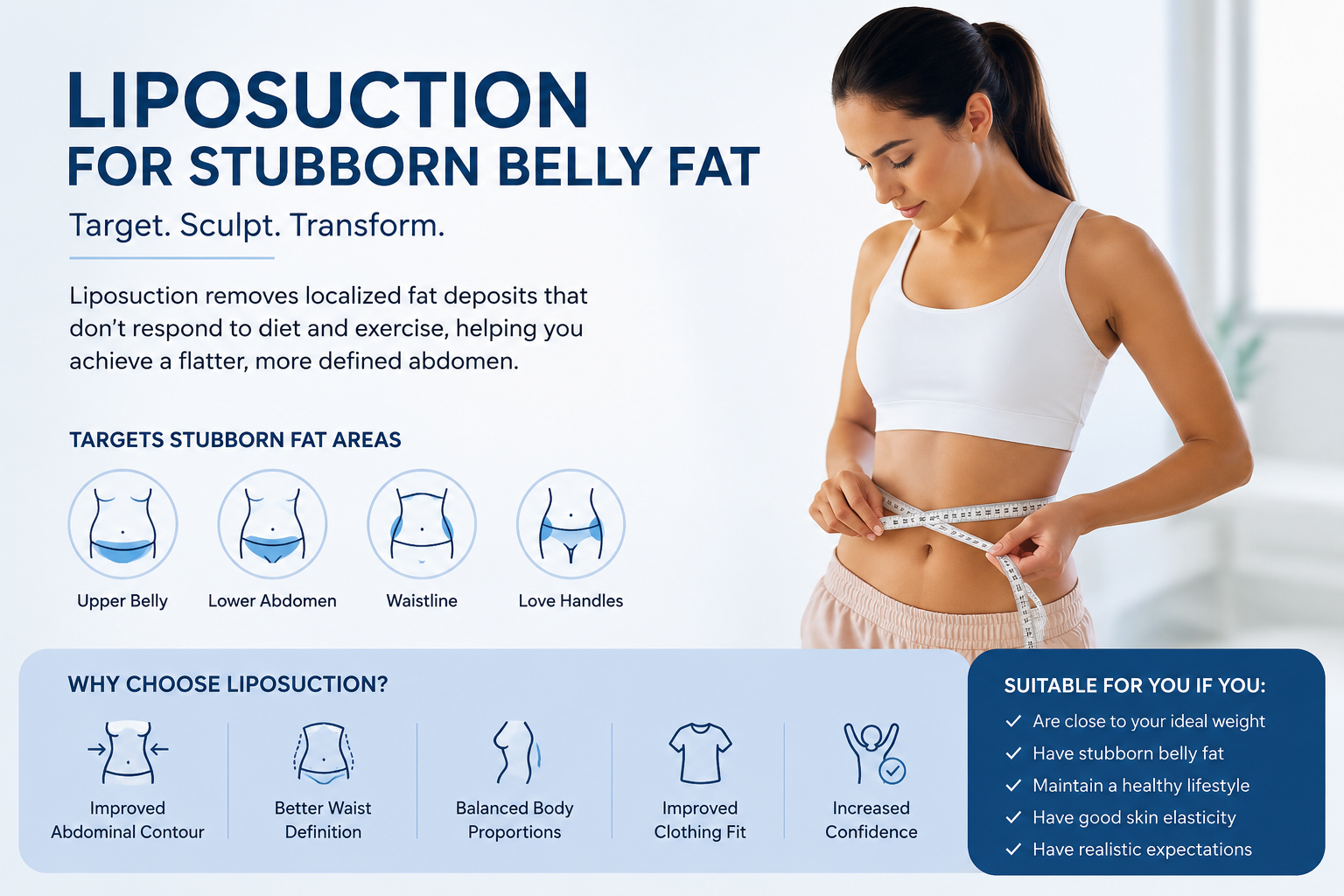
When performed on the abdomen, liposuction can target
- Upper belly fat,
- Lower abdominal fat,
- Waistline fat,
- Love handles
The goal is to create a sculpted and more proportionate abdominal profile.
How Does Liposuction Work?
During the procedure, small incisions are made in the treatment area. A thin tube called a cannula is inserted beneath the skin to remove excess fat cells.
Since the fat cells are physically removed, the treated area contains fewer fat cells afterward. This is why results can be long-lasting when a stable weight is maintained.
Who is an Ideal Candidate for Liposuction for Stubborn Belly Fat?
After learning how liposuction works, the next question is often whether it can solve specific concerns.
The truth is that liposuction is not designed for everyone struggling with weight. It is most effective for individuals who are already making healthy lifestyle choices but continue to deal with stubborn fat deposits that refuse to respond to diet and exercise.
You may be a suitable candidate for liposuction if you:
- Are close to your ideal weight
- Have localized abdominal fat that doesn't improve with exercise
- Maintain healthy eating habits
- Have good skin elasticity
- Have realistic expectations about the outcome
If you're looking for significant weight loss, liposuction is not the solution. However, if your goal is to improve body contours and achieve a more sculpted waistline, it can be an effective option.
What Are the Benefits of Liposuction?
Many patients choose liposuction because they feel their appearance doesn't reflect the effort they've put into diet and exercise.
Potential benefits include:
- Improved abdominal contour
- Better waist definition
- More balanced body proportions
- Long-lasting fat reduction
- Improved clothing fit
- Increased confidence
The results are often most satisfying for people who already lead a healthy lifestyle but struggle with localized fat pockets.
What Are the Risks and Side Effects of Liposuction?
Like any surgical procedure, liposuction carries potential risks.
Common Side Effects
Most patients experience temporary symptoms such as:
- Swelling
- Bruising
- Mild discomfort
- Temporary numbness
- Fluid drainage
Less Common Risks
Although uncommon, complications can include:
- Infection
- Irregular contours
- Seroma formation
- Scarring
- Blood clots
Choosing an experienced plastic surgeon and following post-procedure instructions can help reduce these risks.
What Should You Expect During Recovery?
Recovery varies from person to person, but most patients notice gradual improvement over several weeks.
First Week
- Compression garment use
- Mild soreness
- Swelling and bruising
- Light walking encouraged
First Month
- Reduced swelling
- Improved comfort
- Return to most daily activities
Long-Term
- Continued contour refinement
- More visible results
- Stable outcomes with healthy habits
Final results may take several months to fully develop as the body heals.
Can Belly Fat Come Back After Liposuction?
This is one of the most frequently asked questions.
The fat cells removed during liposuction do not grow back. However, remaining fat cells can still expand if significant weight gain occurs.
Maintaining results typically involves:
- Regular exercise
- Healthy eating habits
- Weight management
- Consistent lifestyle choices
Liposuction for stubborn belly fat can provide meaningful contour improvement for individuals who are already committed to a healthy lifestyle. Understanding the procedure, benefits, limitations, recovery process, and risks helps patients make informed decisions alongside their surgeon.
Frequently Asked Questions
- Is liposuction safe for belly fat removal?
When performed by a qualified plastic surgeon on an appropriate candidate, liposuction is generally considered safe.
- Can I lose weight with liposuction?
Liposuction is not intended for weight loss. It is a body contouring procedure.
- How many liters of fat can be removed?
The amount varies depending on individual anatomy, safety considerations, and surgeon recommendations.
- Will belly fat return after liposuction?
Removed fat cells do not return, but weight gain can enlarge remaining fat cells.
- Does liposuction tighten loose skin?
Liposuction removes fat but does not significantly tighten loose skin.