Can I Get a Hair Transplant If I Have Diabetes or Thyroid? Here Is the Truth
You have been thinking about a hair transplant for a while now. The receding hairline, the thinning crown, the mirror checks you do when nobody is watching, you know it is time.
But then comes the pause. You have diabetes. Or your thyroid has been off for years. Or your blood pressure needs daily medication. And suddenly a simple decision feels complicated with one big question: Am I even allowed to do this?
This blog is here to answer that honestly. Not to scare you, not to push you, just to help you understand the factors your surgeon will consider before recommending a hair transplant.
Why So Many People Are Asking This Question
Diabetes, thyroid problems, and blood pressure issues are very common, especially among men and women in their 30s, 40s, and 50s across India, Bangladesh, Nepal, and nearby regions. These are also the same people who tend to deal with the most hair loss.
But most hair transplant content online either skips this group completely or just says "consult your doctor", which does not actually help anyone.
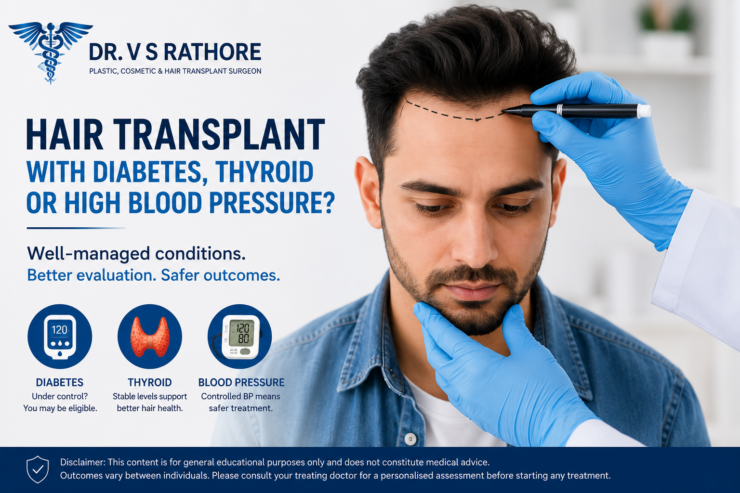
The answer depends on how well your medical condition is managed, but many people are eligible after appropriate evaluation.
Does Diabetes Affect a Hair Transplant?
This is the most common question people search, and it makes complete sense. Diabetes affects how your body heals, how blood flows, and how well your immune system works, all of which matter when you are going through a hair transplant.
Here is what you need to know, in simple terms:
- If your diabetes is under control, it is usually not a problem: If your blood sugar levels are stable and your HbA1c is in a good range, many surgeons may consider you a suitable candidate after a clinical assessment.
- If your diabetes is uncontrolled, that is where the risk lies: High blood sugar makes wounds heal slowly and raises the chance of infection, which can affect how well the transplanted hair takes root
- Diabetes can itself cause hair loss: Poorly controlled diabetes may affect blood circulation and wound healing, which can contribute to hair thinning in some individuals. As it reduces blood flow to the scalp, which weakens hair over time; a hair transplant fixes the appearance but does not fix the root cause
- Blood tests are commonly performed before surgery: Your surgeon will check your blood sugar, HbA1c, and overall health before giving you a go-ahead
- Recovery just needs a little more attention: Diabetic patients may need to follow aftercare steps more carefully, but with proper guidance,many people with well-controlled diabetes can achieve satisfactory outcomes, although individual results vary.
Simply put: Can a diabetic patient get a hair transplant? Yes, if the diabetes is managed. If it is not stable yet, getting your levels under control is the first step.
Thyroid Problems and Hair Transplants: What You Should Know
Both an overactive and underactive thyroid are among the most common and most ignored reasons for hair loss. Many people come in for a hair transplant without knowing their thyroid is what is causing the thinning.
This is why it is so important to talk about:
- An untreated thyroid issue can keep causing hair loss: Even after a transplant, if the thyroid is still unmanaged, the surrounding hair can continue to thin and fall.
- Getting your thyroid levels stable first can make a big difference: Once your TSH, T3, and T4 levels are normal with medication, hair fall may improve once thyroid hormone levels are adequately managed, although this varies between individuals.
- Taking thyroid medication is not a problem for surgery: Most thyroid medicines are completely safe before and after a hair transplant; your surgeon will go through your prescription at the consultation.
- Thyroid levels are always checked before surgery: Thyroid function is commonly assessed before surgery where clinically indicated.
Simply put: If your thyroid is not being treated, sort that out first. If it is stable and your hair is still thinning, a hair transplant is a perfectly reasonable next step.
High Blood Pressure: Does It Stop You From Getting a Hair Transplant?
Not by itself but it does need to be in check before the procedure.
- If your blood pressure is controlled with medication, you are generally fine: The surgical team keeps a close eye on your BP throughout the procedure
- If it is not controlled, it becomes a safety concern: High blood pressure during surgery can cause more bleeding and slow down healing afterward
- Some BP medicines thin the blood: Your surgeon will let you know if any of your medications need to be paused before the procedure, always under proper medical advice
- This is a manageable situation, not a dead end: Many people with well-controlled blood pressure safely undergo hair transplantation after appropriate medical assessment.
So Who Is Actually a Good Candidate?
When people ask about diabetes or thyroid, what they really want to know is - can I do this or not? Here is a simple way to look at it:
You may be considered a suitable candidate if:
- Your diabetes, thyroid, or blood pressure is diagnosed and being managed with medication
- Your hair loss has been roughly the same for the past year, not suddenly getting much worse
- You have enough healthy hair at the back and sides of your head for the surgeon to work with
- You understand that results take time and new hair grows gradually over 6 to 12 months, not overnight
- You are generally in good health and not on any medicines that affect bleeding or healing
You may need to wait a little longer if:
- Your blood sugar, thyroid, or blood pressure is currently not under control
- Your hair loss is still changing rapidly and has not settled into a clear pattern yet
- You have an active scalp condition like alopecia areata that is still spreading
- You are currently going through chemotherapy or are on medicines that suppress immunity
What a Good Hair Transplant Clinic Will Check Before Your Procedure
Before deciding on getting a proper consultation at a qualified hair transplant clinic in Kolkata go through the following:
- Full blood count: Checks for anaemia, signs of infection, and clotting ability
- Blood sugar and HbA1c: Important for anyone with diabetes
- Thyroid levels (TSH, T3, T4): To make sure hormones are not actively causing hair loss
- Liver and kidney function: To understand how your body handles medicines
- Scalp and donor area check: To see how much healthy hair is available for transplanting
- Medicines review: To spot anything that needs to be paused before surgery
- Blood pressure check: To confirm it is safe to proceed on the day
This is not just paperwork. It is what protects you and helps your surgeon assess whether the procedure is appropriate and optimize surgical planning.
A Word on Cost and Finding An Experienced Surgeon
A lot of people searching for the cost of hair transplant in Kolkata are also quietly wondering - given my health condition, is this even worth spending on?
The honest answer is: well-managed medical conditions do not automatically prevent favourable outcomes, although results vary depending on individual health and other factors.Having diabetes, thyroid disease, or hypertension does not automatically mean a hair transplant will be unsuitable, provided the condition is appropriately managed and the preparations are done properly.
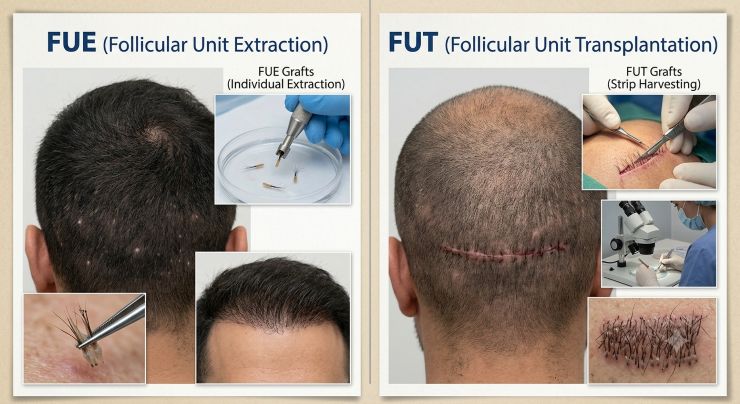
The price of hair transplant in Kolkata depends mainly on how many grafts are needed and which technique is used; FUE is the most widely used method today. Having a medical condition does not make the procedure more expensive. It just makes the pre-surgery checks a bit more thorough; which is a good thing, not a burden.
Finding a hair transplant surgeon in Kolkata who is experienced with patients who have medical conditions is the most important part of this journey. An experienced surgeon will not just clear you for surgery; they will make sure you are genuinely ready for it.
You Are Not Too Complicated. You Just Need the Right Evaluation.
Having diabetes, a thyroid condition, or high blood pressure does not close the door on a hair transplant. It just means the door needs to be opened with a little more care.
Patients who prepare well, follow medical advice, and attend appropriate follow-up appointments are generally better placed for a smooth treatment journey, although outcomes vary between individuals.
A proper consultation will always tell you more than any blog can.
Author: Dr. V S Rathore, M.B.B.S. (Hons) MS, M. Ch, Plastic, Cosmetic & Reconstructive Surgeon
Frequently Asked Questions
Q1. Can a diabetic patient get a hair transplant?
Yes, in most cases as long as the diabetes is well controlled. Your surgeon will check your blood sugar and HbA1c levels before confirming you are ready. If the diabetes is currently not under control, that needs to be sorted first before moving ahead.
Q2. Does diabetes affect hair transplant results?
It can, if the diabetes is not managed. High blood sugar slows down healing and can affect how well the transplanted grafts settle. Many patients with well-controlled diabetes undergo successful hair transplantation, although healing and outcomes vary between individuals.
Q3. Is hair transplant safe in India for patients with thyroid problems?
Yes, when the thyroid condition is being treated and levels are stable. If the thyroid is still unmanaged, it can continue causing hair loss even after the transplant, which is why stabilising it first is so important.
Q4. Which is the best hair transplant clinic in Kolkata for patients with medical conditions?
When choosing a hair transplant clinic, look for a surgeon who does a thorough check-up before surgery - blood tests, medicine review, and scalp assessment; not just a quick look and a booking. Experience in evaluating patients with underlying medical conditions is an important consideration when choosing a surgeon.
Q5. Does high blood pressure stop you from getting a hair transplant?
Not if it is controlled. Managed blood pressure, even with daily medication, is generally not a problem. The surgical team will keep a close eye on your BP throughout the procedure.
Q6. What is the cost of hair transplant in Kolkata for patients with diabetes or thyroid?
The cost does not go up because of a medical condition. The price of hair transplant in Kolkata is based mainly on the number of grafts needed and the method used; not your health history. The pre-surgery checks may be more detailed, but that is simply good medical practice.
Disclaimer: This content is for general educational purposes only and does not constitute medical advice. Outcomes vary between individuals. Please consult your treating doctor for a personalised assessment before starting any treatment.