
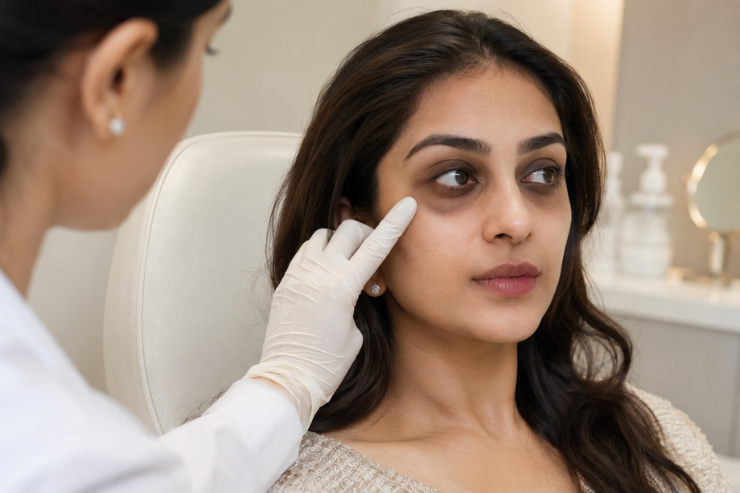
Can PDRN Help With Dark Circles That Won’t Go Away?
Persistent dark circles are one of the most common aesthetic concerns I come across in practice. Many people follow a healthy routine, sleep well, and use a range of eye creams, yet see little change. This is because dark circles are not always a result of tiredness. Genetics, skin thickness, pigmentation, and the structure of the under-eye area often play a larger role.
In recent years, PDRN treatment has gained attention as an option for improving the quality of delicate under-eye skin. This guide explains why dark circles persist, how PDRN works, who may benefit, and what other approaches are available, so you can make an informed decision.
Why Dark Circles Don’t Go Away Even After Good Sleep
Dark circles are not a single problem. They are a pattern with several possible causes, and most people have more than one working together.
Common Causes
Understanding what is behind your dark circles helps you choose the right solution. These are the most common reasons:
- Genetics: Dark circles often run in families and can appear in the teens.
- Pigmentation: Extra melanin in the under-eye skin is common in Indian skin tones.
- Thin skin: Blood vessels show through, giving a bluish or purple tint.
- Hollows under the eyes: Tear troughs create shadows that look like darkness.
- Allergies and eye rubbing: Constant rubbing irritates and darkens the skin.
- Sun and pollution: Both worsen pigmentation over time.
- Low iron or irregular sleep: These can make the area look dull and tired.
What Is PDRN?
PDRN stands for polydeoxyribonucleotide. It is a purified substance, usually derived from salmon DNA, which has been used in tissue repair for years.
It was first studied for wound healing. Over time, doctors started using it to improve skin quality too.
How It Works on Skin
PDRN does not act like a cream that sits on the surface. It works within the skin to support its natural repair process, in these ways:
- Encourages new collagen formation
- Improves blood circulation in the treated area
- Calms inflammation
- Improves hydration and elasticity
In simple words, it helps thin, tired skin behave more like healthy, resilient skin.
How PDRN Treatment May Help Dark Circles
The skin under the eyes is among the thinnest on the face. When it loses thickness and elasticity, blood vessels show through and the area looks darker.
PDRN treatment aims to improve skin quality gradually. Thicker, better-hydrated skin can reduce that see-through, bluish look.
Where It May Help Most
PDRN works best when skin quality is the main issue. It may suit these concerns:
- Thin, crepey under-eye skin
- Bluish or purplish circles from visible vessels
- Dull skin with fine lines
- Skin that looks dry and lacks bounce
Where Results May Be Limited
Some types of dark circles have causes that skin repair alone cannot fix. These usually need a different approach:
- Deep hollows or tear troughs, which often need volume correction
- Heavy brown pigmentation, which needs pigment-focused care
- Puffiness caused by fat pads or fluid
Research on PDRN for skin repair is promising, but studies on dark circles specifically are still limited. Results differ from person to person.
Which Type of Dark Circle Do You Have?
Knowing your type matters because each type responds to different treatments. A doctor’s assessment is always more reliable, but a few simple checks can give you a rough idea.
Simple Checks at Home
These quick tests take less than a minute and can point you in the right direction:
- Stretch the skin gently. If the colour fades, it is likely vascular.
- Shine a torch from the side. If a shadow appears and vanishes, it is likely structural.
- Look at the colour. Brown suggests pigmentation. Blue or purple suggests thin skin and visible vessels.
Many people have a mix of two or three types, which is why one product rarely solves everything.
What to Expect From PDRN Treatment
Knowing the process in advance removes most of the anxiety. Here is how a typical PDRN treatment journey looks.
The Procedure
A trained doctor first cleans the area and applies numbing cream. A very fine needle then places tiny amounts of PDRN under the skin.
The visit usually takes 30 to 45 minutes.
Number of Sessions
The number of sessions depends on your skin condition and your doctor’s assessment. In general:
- Most plans include 3 to 4 sessions
- Sessions are spaced two to four weeks apart
Recovery
The under-eye area is delicate, so some temporary reactions are normal. You may notice:
- Mild redness or swelling for a day or two
- Small bumps that settle within hours
- Occasional bruising
Most people return to routine work the same day.
When Results Appear
Skin improvement is gradual. Many people notice better texture and brightness after a few weeks, and the fuller effect builds over the full course.
Who Should Avoid PDRN Treatment?
PDRN is not right for everyone. Please speak to a doctor first if any of the following apply to you:
- Allergy to fish or salmon
- Pregnancy or breastfeeding
- Active skin infection near the eyes
- Blood-clotting problems or use of blood thinners
- History of severe allergic reactions
Other Options for Stubborn Dark Circles
Because dark circles have many causes, doctors often suggest other approaches, sometimes in combination. The right choice depends on your type.
- Sun protection: Daily sunscreen is the most underrated step.
- Brightening ingredients: Vitamin C, niacinamide, or retinoids, used as advised.
- Chemical peels or lasers: For pigmentation-led circles.
- Fillers or fat transfer: For hollows and deep shadows.
- Treating allergies or anaemia: If these are contributing.
Simple Daily Habits That Support Results
Treatments work better when daily habits support them. These small changes make a real difference over time:
- Sleep 7 to 8 hours on a regular schedule
- Apply sunscreen every morning, even indoors near windows
- Avoid rubbing or scratching your eyes
- Use a cold compress when eyes feel puffy
- Eat iron-rich foods like leafy greens, lentils, and jaggery
- Limit long, unbroken screen time
Final Thoughts
Dark circles that won’t go away are rarely a sign of poor habits. They usually come from genetics, skin thickness, pigment, or structure. PDRN treatment can be a useful option when thin, tired skin is the main concern, but it works best when matched to the right cause.
If your under-eye darkness has not improved with home care, a proper skin and structure assessment is a sensible next step.
Author:
Dr. V S Rathore
M.B.B.S. (Hons) MS, M. Ch
Plastic, Cosmetic & Reconstructive Surgeon
FAQs
1. Can PDRN remove dark circles completely?
Not always. It can improve skin quality and reduce the look of dark circles, especially thin-skin types. Deep hollows or heavy pigmentation may need other treatments too.
2. Is PDRN treatment safe for the under-eye area?
When done by a trained doctor with proper hygiene, it is generally considered safe. Temporary redness, swelling, or bruising can happen. A check for allergies, especially to fish, is important beforehand.
3. How long do PDRN results last?
Results build gradually and can last several months. Skin ageing, sun exposure, and lifestyle affect how long they stay. Some people choose occasional maintenance sessions.
4. Does PDRN hurt?
Most people feel mild pricking or pressure. Numbing cream is usually applied first, so it is generally tolerable.
5. What is the difference between PDRN and fillers for dark circles?
PDRN improves skin quality and repair, while fillers add volume to hollow areas. If your dark circles come from shadows or sunken tear troughs, fillers may suit better. If they come from thin, tired skin, PDRN may help more.
This blog is for general educational purposes only and is not a substitute for professional medical advice, diagnosis, or treatment. Individual results and suitability vary from person to person. Please consult a qualified medical professional before making any decision about your skin or treatment.